


Exploring Cyprus: Beaches, Mountains, and a Thousand Years of History
Cyprus has a way of surprising even seasoned Mediterranean travelers. At a glance, it promises sun and sea (plenty of both, delivered reliably). Spend a little more time, though, and the island begins to unfold in unexpected directions: pine-scented mountain trails, villages where centuries-old crafts are still practiced by hand, and archaeological sites that feel less curated than lived alongside. It's an island that resists being defined by a single mood, and that's precisely its appeal.
Set at the crossroads of Europe, Asia, and the Middle East, Cyprus carries the imprint of countless cultures without feeling overdetermined by any one of them. What you get instead is variety (geographic, historical, and experiential) compressed into a place small enough to explore deeply, yet diverse enough to feel like several trips in one.
Cyprus: The Hidden Gem Of The Mediterranean | Travel Guide
🇨🇾✨ CYPRUS: Greece’s Secret Rival | Full Travel Guide 🏝️ Welcome back to Traveling Heavens! Today we’re exploring Cyprus — a Mediterranean island where sapphire seas meet rugged mountains, where ancient ruins stand beside charming villages, and where luxury blends seamlessly with tradition.
A Coastline That Refuses to Repeat Itself
With more than 600 kilometers of shoreline, Cyprus delivers a coastline that rarely looks the same twice. The southeastern corner of the island, around Ayia Napa and Protaras, feels almost improbably tropical. The water here is pale turquoise and shallow, beaches are soft underfoot, and the atmosphere leans lively without tipping into chaos. Nissi Beach, with its famous sandbar stretching toward a small islet, draws a social crowd, while nearby Fig Tree Bay offers a calmer, more refined beach day with equally clear water.
Head west and the tone shifts. Around Paphos and Coral Bay, the coastline becomes more rugged. Chalky cliffs, sea caves carved by centuries of waves, and rocky outcrops catch the light at sunset. It's less about lounging and more about lingering: watching the horizon change color, swimming in deeper waters, or simply letting the landscape assert itself.
The Wild Edge: Akamas Peninsula and the Blue Lagoon
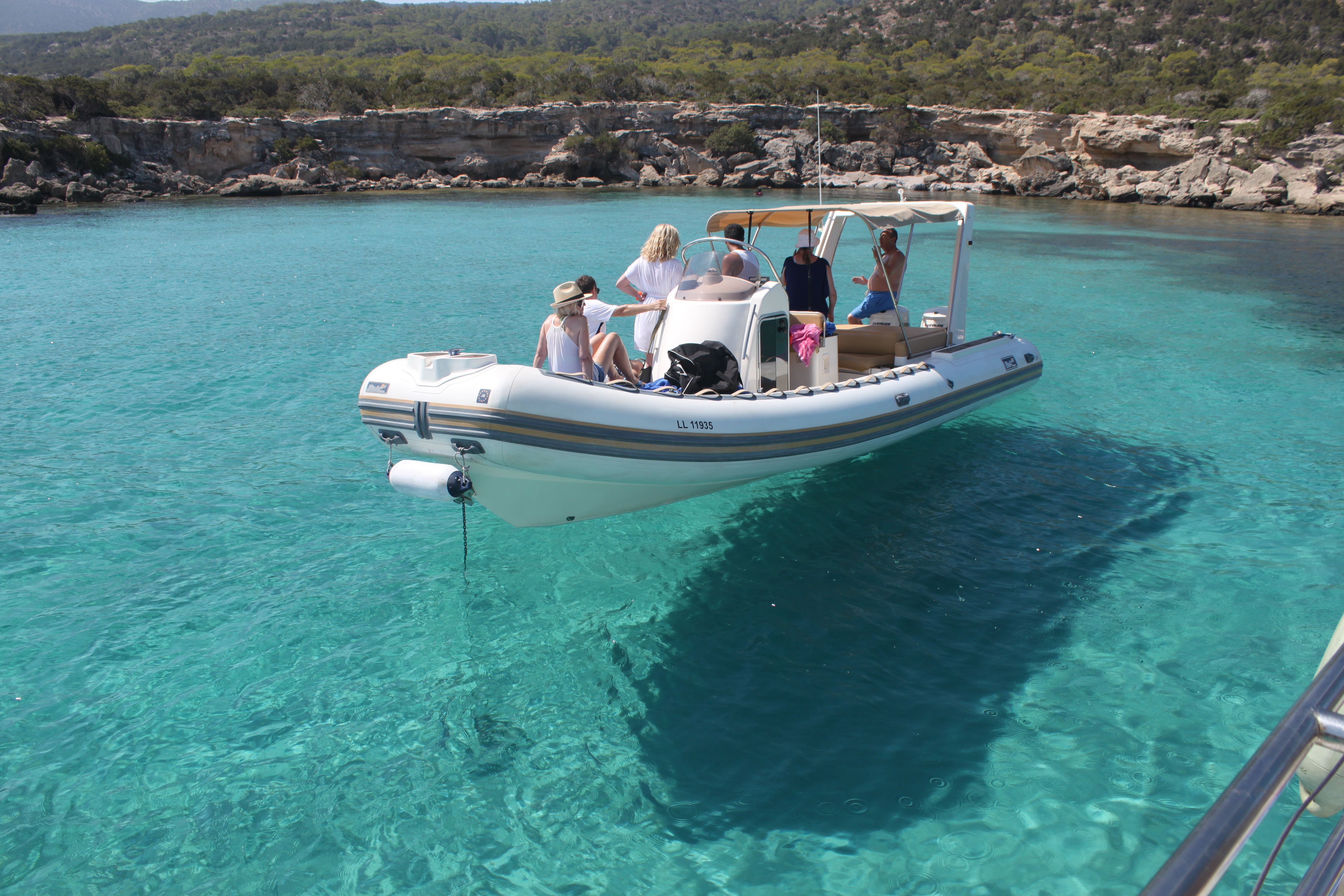
Water So Clear You Can See the Shadow of the Boat Below
The Akamas Peninsula feels deliberately untouched, a reminder of what much of the Mediterranean might have looked like before resort development took hold. Roads thin out, crowds fade, and nature takes over. Hiking trails cut through valleys heavy with the scent of wild herbs, while the coastline hides small coves accessible only by foot or water.
The Blue Lagoon is the peninsula's visual centerpiece. Its clarity is such that boats seem suspended rather than afloat, hovering above the seabed. Kayaking along this stretch reveals sea caves and hidden inlets that reward curiosity and a slower pace. It's one of the few places on the island where Cyprus feels truly remote.
Into the Mountains: Troodos and the Island's Cooler Heart

The Many Climates of Cyprus
Cyprus's interior offers a counterpoint to its beaches. The Troodos Mountains rise gently but decisively, bringing cooler air, shaded forests, and a rhythm of life that feels removed from the coast. Pine trees dominate the landscape, broken occasionally by stone villages and hidden waterfalls.
The Caledonia Waterfalls Trail is among the most popular hikes, winding through shaded paths and over small bridges before reaching cascades that feel almost Alpine. Seasonal changes here are pronounced. Spring brings wildflowers, autumn brings color to the forests, and in winter, Mount Olympus can even see snowfall. It's a reminder that Cyprus is not just a summer destination, but a year-round one.
Villages That Still Feel Lived In

Escape to Peaceful Mountain Villages
Some of Cyprus's most memorable experiences happen far from the coast, in villages where daily life continues largely unchanged.
Omodos, with its cobbled streets and low stone buildings, is a center for local wine and traditional cuisine. Taverns serve grilled meats, village bread, and halloumi made nearby, often accompanied by house wine poured generously and without ceremony.
Lefkara is known for its intricate lacework, a craft passed down through generations. The lace (delicate, time-consuming, and unmistakably handmade) has become a symbol of Cypriot patience and precision. Even today, it's common to see women working quietly in doorways, continuing a tradition that predates modern tourism.
Kakopetria, tucked into the mountains, feels almost storybook. Houses lean over a river that runs through the village, and the constant sound of moving water gives the place a sense of calm continuity. It's the kind of village where time seems to slow without making a point of it.
Layers of Faith and Empire

Explore Roman Ruins
Cyprus's history is not confined to museums. It's embedded in the landscape. Byzantine monasteries sit high in the mountains or hidden among trees, their interiors rich with frescoes that have survived centuries of political change and environmental exposure. Kykkos Monastery is among the most significant, both spiritually and architecturally, drawing visitors not just for its religious importance but for its setting and artistry.
Elsewhere, ancient history reveals itself in fragments and grand gestures alike. In Paphos, Roman mosaics depict scenes of mythology with remarkable preservation, while the nearby Tombs of the Kings carve monumental shapes directly into rock. The amphitheater at Kourion, perched above the sea, remains one of the island's most dramatic sites. Its open-air design offers uninterrupted views alongside echoes of ancient performances.
Where to Stay: From Refined Resorts to Village Guesthouses
Accommodation in Cyprus mirrors the island's diversity. Along the coast, high-end resorts like Cap St. Georges Hotel & Resort, Anassa, and the Elysium combine thoughtful architecture with access to the sea, offering comfort without detachment from the surrounding environment. These properties tend to emphasize space, light, and a sense of calm rather than excess.
Inland, smaller guesthouses in the Troodos Mountains and village centers provide a different kind of luxury: one rooted in authenticity. Family-run, often housed in restored stone buildings, they offer local breakfasts, personal recommendations, and a closer connection to Cypriot life.
Getting There and Getting Around
Cyprus is easily reached via two main airports: Larnaca on the east and Paphos on the west. Both offer good connections to major European hubs. Once on the island, renting a car is less a convenience than a necessity. Public transport exists, but the real character of Cyprus lies in the spaces between major towns: the mountain roads, coastal detours, and villages that don't make it onto standard itineraries.
An Island That Rewards Curiosity
Cyprus doesn't demand that you choose between beach and culture, relaxation and exploration. It offers all of it, often within the same day. Swim in clear water in the morning, hike through forests by afternoon, and dine in a village square by evening. The island's greatest strength may be its refusal to be simplified.
For travelers willing to look beyond the obvious, Cyprus reveals itself slowly, generously, and with a sense of quiet confidence. An island that knows exactly what it is, without feeling the need to announce it.


