For many diners in London, New York, or Sydney, Indian food feels like an old friend. Butter chicken. Chicken tikka masala. Creamy sauces, warm naan, a predictable spectrum of heat. It's comforting, reliable, deeply loved.
But it's also incomplete.
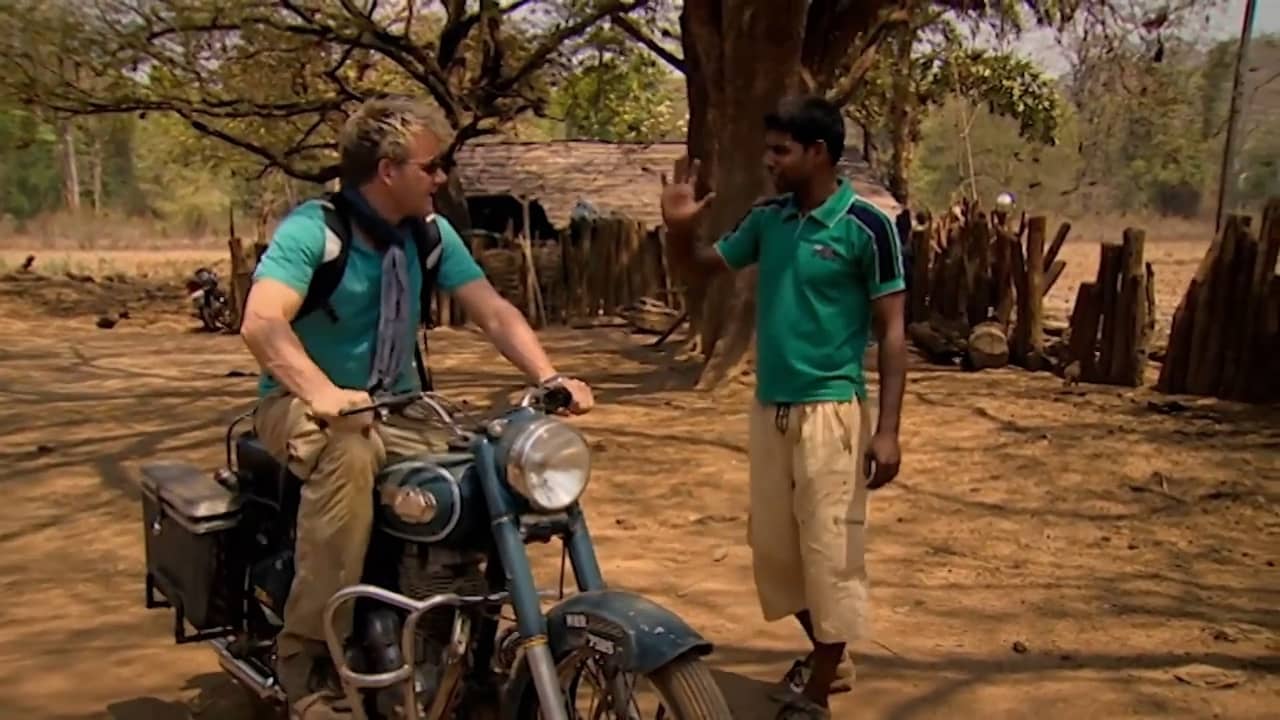
That gap between expectation and reality hits you while watching Gordon Ramsay's Great Escape, when he visits Moti Mahal in Delhi, the legendary restaurant credited with inventing some of the very dishes that shaped Indian food abroad. What he encounters isn't "better" than what we're used to back home. It's different in purpose, balance, and context.
Experience Authentic Indian Cuisine with Gordon Ramsay
Gordon Ramsay @gordongram dives into the bold flavors of authentic Indian cuisine while traveling through India, experiencing the spices, techniques, and traditions at the heart of the food 🇮🇳🔥
📷Instagram📍India
Indian food in India is not a monolith, and it was never designed to travel neatly. What we eat in the West is the result of adaptation, migration, and compromise. It's delicious in its own right, but far removed from how food is actually cooked, eaten, and understood across the subcontinent.
Where Western Indian Food Really Comes From
Moti Mahal's story is essential to understanding this divide.
Founded in Delhi after the Partition of India in 1947, Moti Mahal became a gathering place for Punjabi refugees who brought tandoor cooking and a style of hearty, spice-layered food meant to feed large families. It was here that tandoori chicken, dal makhani, and butter chicken were popularized, not as ancient recipes, but as clever solutions born from circumstance.
Butter chicken, for instance, wasn't created as a ceremonial dish. It was a practical innovation: leftover tandoori chicken simmered in a tomato-butter gravy, enriched with cream and spice. The result was indulgent, balanced, and deeply appealing. It became one of the most recognizable "Indian" foods worldwide.
But context matters. These dishes were developed in post-Partition Delhi, served to locals, eaten alongside other foods, and adjusted daily based on what was available. When they later traveled abroad (especially to the UK), they were adapted again. Sauces became thicker, sweeter, milder. Spice blends were simplified. The food became more uniform, more comforting, more aligned with Western expectations.
What survived was the idea of Indian food, not its full complexity.
How Indian Food Is Actually Eaten in India
One of the biggest surprises for first-time visitors is how radically regional Indian food is, and how little that diversity appears on Western menus.
In India, food changes dramatically every few hundred kilometers. Northern dishes lean into wheat, dairy, and slow-cooked gravies. Southern food favors rice, fermented batters, coconut, tamarind, and sharper acidity. The west emphasizes seafood and spice heat; the east balances mustard, sweetness, and fish. There is no single "Indian flavor profile."
Meals are also structured differently. Dishes aren't meant to stand alone as stars; they're part of a complete table. Spice is layered, not explosive. Heat is often secondary to aroma, texture, and balance. A curry might be lighter than you'd expect. A simple lentil dish might be the most complex thing on the plate.
Watching Ramsay eat at Moti Mahal, what stands out isn't shock but recalibration. The food isn't trying to overwhelm. It's deeply seasoned, yes, but also restrained. The richness is intentional, not excessive. And nothing tastes quite like its exported cousin.
Gordon Ramsay’s Great Escape S01 E01 - India Part 1
📺Journy TV
Why Indian Food Changed When It Traveled West
When Indian restaurants began opening across Britain in the mid-20th century, they weren't cooking for Indians. They were cooking for British diners unfamiliar with the cuisine.
That meant adjusting spice levels, smoothing textures, and creating dishes that felt reassuring rather than challenging. Chicken tikka masala, often called Britain's unofficial national dish, is the clearest example. Creamy, tomato-forward, gently spiced, and designed to please, it doesn't exist in India the way it exists in Britain.
Other dishes followed the same path. Jalfrezi, vindaloo, korma: all adapted, standardized, and sweetened to varying degrees. Over time, these versions became so popular that they eclipsed their origins.
None of this is a failure. It's how cuisines survive abroad. But it explains why travelers often feel disoriented when they eat in India for the first time. The food is familiar in name, unfamiliar in execution.
What to Expect When Eating in India
The biggest difference isn't spice. It's intent.
Indian food in India is cooked for people who eat it daily. It's designed to be part of routine, not spectacle. Portions tend to be smaller. Flavors are sharper, more precise. Dishes vary from kitchen to kitchen, cook to cook. There's less emphasis on creaminess and more on spice technique: the way cardamom opens up in hot oil, how curry leaves crackle, the depth that comes from slow-roasting whole spices.
Restaurants like Moti Mahal are famous, yes, but they're still local institutions first. Street food vendors might serve something radically different from what you expect, even if the name sounds familiar. And some of the most memorable meals will be the simplest: lentils, rice, bread, vegetables, eaten hot and fresh off the flame.
For travelers, the best approach is curiosity without comparison. Order what you know if you want, but ask what a place is known for, or try something unfamiliar. That's where the real education happens.
Why This Difference Matters
Indian food in the West isn't "wrong." It's part of a parallel tradition, one shaped by migration, adaptation, and hospitality. But understanding the difference between that tradition and the food cooked in India itself deepens your appreciation for both.
Watching Gordon Ramsay eat at Moti Mahal isn't about validation. It's about perspective. The dishes he recognizes take on new meaning when seen in their original environment, cooked for people who never expected them to leave Delhi, let alone conquer the world.
Indian cuisine is not a single story. It's regional, evolving, and deeply tied to place. And the further you travel toward its source, the less it tries to impress, and the more it simply makes sense.



 Five Star Alliance