


The Gilded Age of Central Asia
For centuries, Samarkand existed in the Western imagination as something between a rumor and a mirage—a city of turquoise domes shimmering at the edge of the known world. To reach it once meant months of caravan travel, bribes at borders, and a tolerance for hardship that limited the journey to merchants, mystics, and the most determined explorers.
I traveled the ancient Silk Road from Uzbekistan🇺🇿 to Kyrgyzstan🇰🇬 | central asia diaries
I’ve long been fascinated by the Silk Road- the ancient trade route that once connected East and West. It wound through deserts and mountains, past mosques and markets, across borders that didn’t yet exist. Along this road, goods were exchanged, societies intertwined, cultures shared, and knowledge spread. Driven by that curiosity, I flew across the world to trace part of the Silk Road myself, traveling through Uzbekistan and Kyrgyzstan in search of its stories.
As we move into 2026, that version of the Silk Road has quietly disappeared. In its place is something far more surprising: a country that has opened itself to the world with remarkable speed, pairing deep history with modern infrastructure, and doing so at a price point that feels almost anachronistic. Uzbekistan’s renaissance isn’t just about restored madrasahs or polished museum displays. It’s about access—easy, affordable, and unexpectedly luxurious.
As of January 1, 2026, U.S. citizens can enter Uzbekistan visa-free for up to 30 days. Combined with a favorable exchange rate and significant investment in transportation and hospitality, the result is one of the most compelling travel equations anywhere today: world-class experiences, minimal friction, and costs that feel closer to Southeast Asia than Europe.
This is not a backpacker’s frontier anymore. It’s a value-luxury destination hiding in plain sight.
The Modern Caravan: VIP Travel Reimagined
The Silk Road was never just a route; it was a system of trade, ideas, and movement. In 2026, its modern equivalent is the Afrosiyob: Uzbekistan’s Spanish-built high-speed rail network that now links the country’s major historic cities with speed and ease that would have been unthinkable even a decade ago.
Travelers are often struck by how polished the experience feels. Stations are clean and orderly. Boarding is calm. Luggage is handled without drama. And then there’s the VIP carriage—an experience that still feels slightly unreal once you’re seated.
Leather recliners, wide spacing, quiet cabins, and attentive tea service define the top tier. In Europe or the U.S., this level of comfort would easily cost $250 or more for a comparable journey. On the Afrosiyob, a VIP ticket between Tashkent and Samarkand typically runs around $55. For the price of a modest lunch in New York, you can cross the desert and steppe in complete comfort.
This isn’t splurging. It’s simply how travel works here.
Editorial note: 2026 also marks a significant milestone for travelers heading west. New high-speed service to Khiva has reduced what was once a punishing 15-hour journey from Tashkent to just over seven. The “end of the road” now feels firmly within reach.
VIP LUXURY on Uzbekistan's Afrosiyob Highspeed Train
We'll be travelling in VIP Class today in some super luxurious seats on the 2 hours trip from Tashkent to Samarkand, so come along and let's experience it together!
The Luxury Multiplier: Why Your Dollar Goes Further
Uzbekistan’s appeal isn’t just affordability—it’s what that affordability enables. Every dollar stretches further, not by cutting corners, but by upgrading the experience itself. This is the “Luxury Multiplier,” and it reshapes how you move through the country.
Five-Star Stays Without the Five-Star Guilt
In cities like London or Paris, a suite in a grand hotel can easily exceed $800 a night. In Tashkent, the newly opened InterContinental offers comparable comfort, service, and design for a fraction of that price. Rates at top-tier properties typically land between $150 and $250 per night. In Bukhara, boutique hotels like the Mercure Old Town place you inside restored historic buildings without sacrificing modern amenities.
Luxury here feels relaxed, not performative—and importantly, accessible.
Private Curated Journeys
The Afrosiyob high-speed rail remains the most efficient way to travel between Uzbekistan’s major cities, but a private chauffeur comes into its own on longer, less direct routes where time slows and the landscape opens up. Hiring an air-conditioned car for a full day—often to cover desert stretches such as Bukhara to Khiva—allows travelers to stop at remote 8th-century ruins, rural silk workshops, and roadside chaikhanas that trains simply pass by. The cost, typically around $100 for the car, transforms what would be a long transit day into a tailored, unhurried journey—an experience that would be prohibitively expensive in most of the world, but is extremely accessible here.
A Journey Through the Golden Triangle
The classic Silk Road route remains unchanged, but the experience has evolved. What was once logistically complex now unfolds with ease, allowing the focus to return to place rather than process.
Samarkand
Registan Square remains one of the world’s great urban spaces. At sunset, the madrasahs glow as their tiles shift from gold to deep sapphire. In 2026, the scene still feels remarkably intimate. Crowds are present but manageable, and there are moments—especially in the early evening—when the wind moving through the courtyard is louder than the voices around you.
Samarkand feels monumental without being overwhelming, a rare balance for a city of such historical weight.
Bukhara
If Samarkand is ceremonial, Bukhara is lived-in. This is a city of courtyards, workshops, and quiet corners where tradition hasn’t been staged—it’s simply continued.
Bukhara remains one of the best places in the world to encounter living craft traditions. Commissioning a hand-stitched suzani—intricate silk embroidery made to order—might cost a few hundred dollars. In a Western gallery, a comparable piece would command several thousand. Here, you meet the artisan, choose the pattern, and watch the work take shape.
Khiva
Khiva feels like a conclusion, both geographically and emotionally. Enclosed within its ancient walls, the old city functions as a kind of living museum—one you can still inhabit.
The Hotel Orient Star, housed in a former 19th-century madrasah, offers a particularly memorable stay. The rooms were once students’ cells; today they are quiet, atmospheric sanctuaries that make the past feel immediate rather than distant.
The Golden Triangle
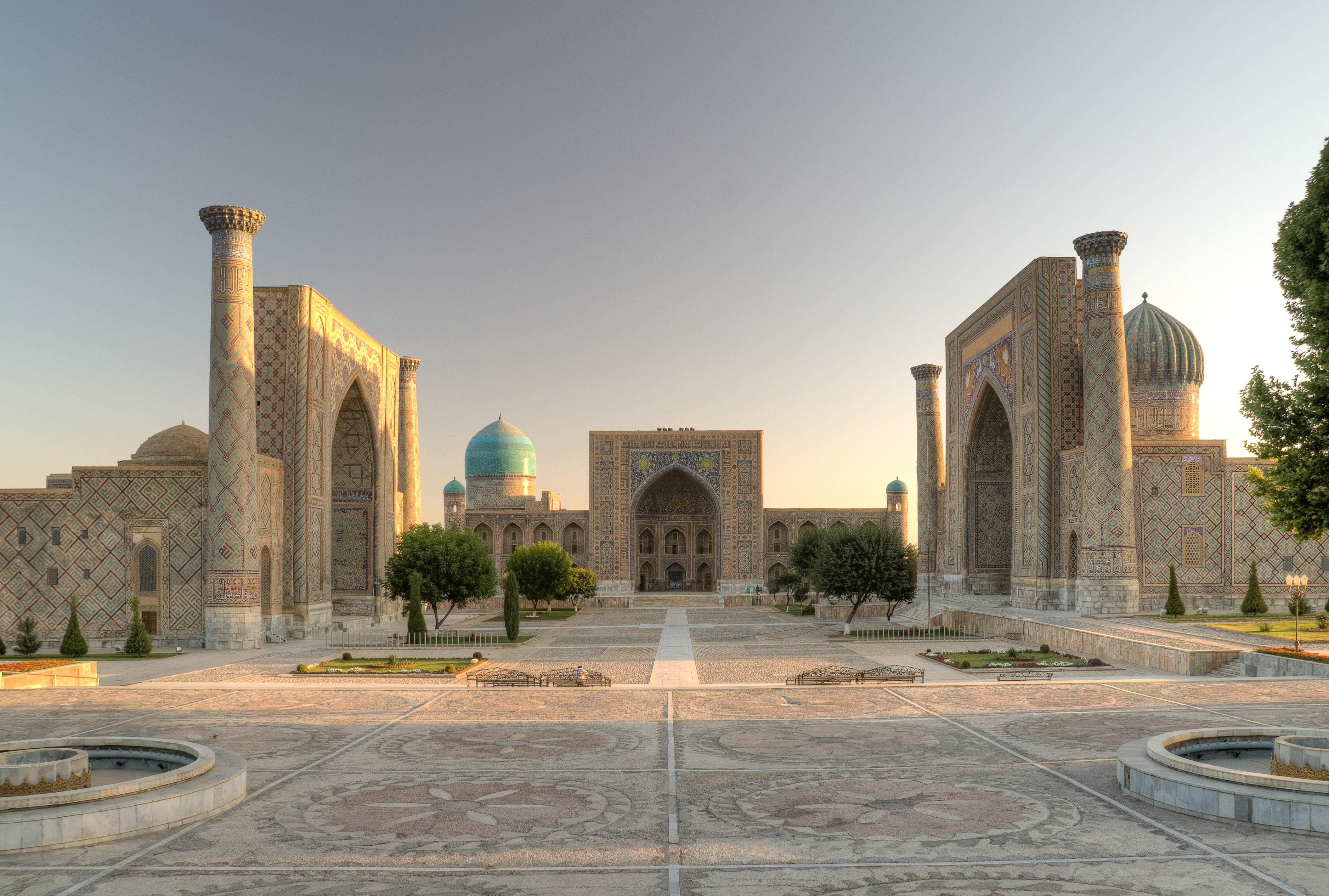
The Historic City of Samarkand

The City of Bukhara

The Ancient Walled City of Khiva
Image Details
The 2026 Traveler’s Brief: What to Know
Uzbekistan may feel effortless once you arrive, but a few insider strategies can make the experience even smoother.
Booking Trains
High-speed train tickets go on sale exactly 45 days before departure. VIP seats often sell out within minutes. Use the official Uzbekistan Railways app or have a hotel concierge book them the moment sales open.
Getting Around Cities
Download Yandex Go, the local equivalent of Uber. A 20-minute ride across Tashkent rarely exceeds $4, eliminating the need for negotiation or guesswork.
Timing Your Trip
Late March is a sweet spot. You’ll catch Nowruz, the Persian New Year, when cities come alive with public celebrations, music, and shared meals—while also enjoying cool desert breezes before the summer heat sets in.
The Verdict
Uzbekistan in 2026 occupies a rare space in global travel. It feels ancient without being frozen in time, modern without losing its soul. You can move through cities that once anchored the world’s greatest trade network while enjoying infrastructure that rivals far wealthier nations.
Most striking of all is the sense of balance. This is a place where history isn’t fenced off, luxury isn’t exclusive, and travel doesn’t feel like a performance. You live well, move easily, and engage deeply—often for less than you would expect to pay anywhere else.
The Silk Road is no longer a legend you read about. In 2026, it’s open, accessible, and quietly entering a new golden age.


